



The bacterial protein DnaK has been linked to chemotherapy resistance, making it a potential target for new cancer treatments. Dr Rahul Gupta, President of GATC Health, explains how predictive AI could help prioritise drug candidates by forecasting their efficacy, safety and off-target risks ahead of further laboratory testing.
Selecting which drug candidates to advance is a major challenge in early-stage discovery. Promising activity against a target is not always enough to justify further development, particularly when questions remain about safety, selectivity and therapeutic effects.
DnaK Therapeutics has partnered with GATC Health to evaluate 16 potential cancer drug candidates using predictive artificial intelligence (AI). Announced in September 2026, the collaboration aims to identify a smaller group of compounds for experimental testing as DnaK Therapeutics works towards selecting a lead development candidate.
The programme focuses on bacterial DnaK, a molecular chaperone protein implicated in chemotherapy resistance. DnaK Therapeutics is developing selective small-molecule inhibitors intended to interfere with this mechanism and potentially improve responses to existing cancer treatments.
Speaking to Drug Target Review, Dr Rahul Gupta, President of GATC Health, explained why candidate selection requires more than identifying the compound with the strongest target activity.
“At this stage, the question is not simply which compound looks most active against the target. We want to understand which candidates have the strongest overall development profile.”
What is DnaK?
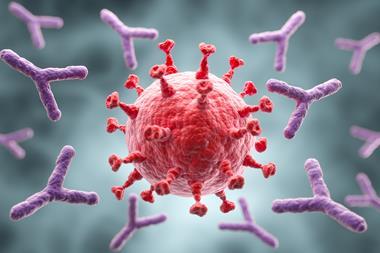
DnaK is a bacterial heat shock protein belonging to the Hsp70 family of molecular chaperones. The protein facilitates correct protein folding, prevents protein aggregation and helps bacteria survive under stressful conditions.
Research suggests that bacterial DnaK can also interfere with biological processes in human cells, including pathways involved in DNA repair and tumour suppression. These interactions have generated interest in DnaK as a potential therapeutic target in cancer.
Evaluating candidates through predictive modelling
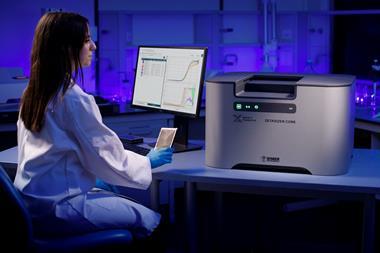
GATC Health plans to use its Operon AI platform to assess the compounds and generate Derisq reports examining their predicted efficacy, safety and potential off-target effects.
According to Gupta, Operon integrates information from multiomic datasets, preclinical evidence, disease biology, patient pathology and drug-interaction data.
The company uses these inputs to model potential interactions between drug candidates and human biological systems, generating predictions relating to mechanism of action, toxicology and pharmacokinetics.
For the DnaK programme, the platform will combine information about the bacterial target with compound-specific data to compare the candidates’ predicted profiles.
Gupta explained how predictive modelling could complement conventional experimental screening.
“The principal advantage is the ability to evaluate a much broader set of biological relationships and potential risks earlier and in parallel. Conventional screening is essential, but it is necessarily constrained by the number of experiments you can run, the models you choose and the time and resources available.”
By examining potential safety concerns and unintended biological interactions alongside target activity, the researchers hope to identify differences between candidates that may not be apparent from individual screening results.
At this stage, the question is not simply which compound looks most active against the target. We want to understand which candidates have the strongest overall development profile.
Why bacterial DnaK presents a complex therapeutic target
DnaK belongs to the Hsp70 family of molecular chaperones, which includes related proteins in human cells. This raises concerns about selectivity, as compounds designed to inhibit bacterial DnaK could also interact with human Hsp70 family members.
Gupta explained that assessing these candidates requires researchers to consider the bacterial target alongside the host biology and tumour microenvironment.
“It creates a more complex selectivity and systems biology problem. The target originates from bacteria, but its effects occur within a human tumour microenvironment, so we have to think about the bacterial target, the host biology and the cancer biology together rather than in isolation.”
A 2024 study published in the Journal of Translational Medicine provides experimental evidence supporting bacterial DnaK as a potential therapeutic target.
The authors, who include DnaK Therapeutics’ scientific founders Dr Francesca Benedetti, Dr Robert Gallo and Dr Davide Zella, investigated how DnaK proteins from Mycoplasma fermentans and Fusobacterium nucleatum affected responses to the chemotherapy drugs cisplatin and 5-fluorouracil.
Using human colorectal and gastric cancer cell lines exposed to recombinant bacterial DnaK, the researchers found that the proteins reduced the anticancer activity of cisplatin and, in most conditions tested, 5-fluorouracil. Treatment with the DnaK-binding peptide ARV-1502 restored chemotherapy activity in the experimental models.
The researchers also reported improved chemotherapy responses in experiments using primary tumour cells isolated from two spontaneous tumours in DnaK knock-in mice.
The authors cited earlier research indicating that ARV-1502 could bind bacterial DnaK without interacting with human Hsp70. However, these findings concern a peptide rather than the small-molecule inhibitors currently being evaluated by DnaK Therapeutics.
The findings remain preclinical, and the activity and selectivity of DnaK Therapeutics’ 16 candidates have yet to be established experimentally.
Assessing the reliability of AI predictions
The usefulness of predictive AI depends on how reliably computational predictions correspond with experimental outcomes.
GATC Health has reported benchmarking its technology through a blind validation conducted with the University of California, Irvine. According to Gupta, the platform achieved 91 percent specificity for negative target activation and 86 percent sensitivity for positive target activation when predicting molecule–target activity from previously unseen chemical structures.
These company-reported figures relate specifically to molecule–target activity prediction and do not establish the platform’s accuracy in predicting efficacy, safety or the performance of the 16 DnaK candidates.
Gupta stressed that platform performance should not be treated as proof that individual predictions are correct.
“For a programme like DnaK’s, the prediction is best viewed as decision support. We look for consistency across different dimensions of the analysis, such as efficacy, safety, mechanism and off-target risk, and then use the subsequent experimental work as the critical test of whether those predictions hold up in the laboratory.”
For a programme like DnaK’s, the prediction is best viewed as decision support.
Understanding the biological factors behind each prediction could also help researchers identify specific hypotheses for subsequent testing, rather than relying solely on a numerical ranking.
Testing predictions in the laboratory
Once the computational analysis is complete, DnaK Therapeutics intends to select a smaller group of high-priority compounds for experimental evaluation.
According to Gupta, the company’s scientific team will assess whether the observed activity, selectivity and other characteristics of these compounds correspond with their predicted profiles.
Gupta said the subsequent experiments would provide an opportunity to assess the accuracy of the platform’s predictions.
“That creates a direct prospective test of the platform: we can compare the predicted ranking and individual risk or efficacy signals with what is subsequently observed experimentally, rather than simply looking backward at already-known outcomes.”
Differences between predicted and observed results could reveal limitations in the models, while the laboratory findings will help determine whether the prioritised compounds warrant further development.
Making better use of drug discovery resources
For smaller biotechnology companies, advancing multiple compounds through preclinical testing can require substantial investment. Gupta believes predictive AI could help researchers decide where to concentrate those resources.
“The challenge in early discovery is often not a lack of possibilities; it is determining which possibilities deserve scarce time and capital.”
He added: “When several compounds look promising based on conventional measures, predictive analysis can add another dimension by evaluating potential efficacy, safety and development risk before every candidate moves through the same expensive sequence of experiments.”
The challenge in early discovery is often not a lack of possibilities; it is determining which possibilities deserve scarce time and capital.
Dr Robert Gallo, co-founder of DnaK Therapeutics, expressed a similar concern in the companies’ September announcement.
“We have a number of potentially viable drug candidates, but we need to determine which are the most beneficial, effective, and safest before we invest substantial resources.”
The companies have suggested that AI-based prioritisation could shorten experimental timelines by months and save millions of dollars in research and development costs.
Next steps for the DnaK programme
The computational analysis aims to identify candidates with favourable predicted efficacy, selectivity and safety profiles, while examining the biological factors that may influence their performance.
These predictions will guide DnaK Therapeutics’ experimental testing as the company works towards selecting a lead development candidate.
The next stage will establish whether the predicted differences between compounds are supported by laboratory results, providing an important test of the platform’s usefulness in early-stage drug discovery.
Reference
Benedetti F, Mongodin EF, Badger JH, et al. Bacterial DnaK reduces the activity of anti-cancer drugs cisplatin and 5FU. Journal of Translational Medicine. 2024;22:269. https://doi.org/10.1186/s12967-024-05078-x









No comments yet