


Researchers have found that the TRPV1 pain receptor responds differently to individual stimuli, revealing functional differences that could help inform the development of more selective pain medicines.
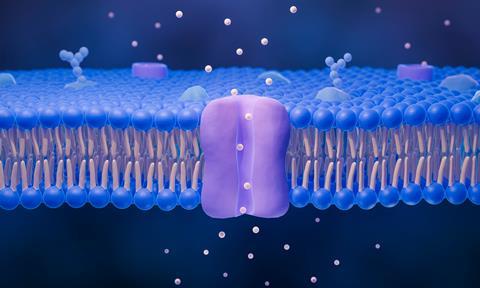
Researchers at the University of California, Davis have identified distinct functional states of the TRPV1 receptor, a potential therapeutic target for pain relief, which could provide new opportunities for designing more selective analgesics.
The study, published in Proceedings of the National Academy of Sciences (PNAS), found that different stimuli activate TRPV1 in different ways, challenging the assumption that the receptor adopts a single open state regardless of how it is triggered.
The findings could help researchers understand how to target pain-related receptor activity while preserving its essential physiological functions.
Understanding how TRPV1 responds to different stimuli
TRPV1 is an ion channel found in pain-sensing nerve cells that responds to heat, acidic conditions and chemical compounds such as capsaicin, the substance responsible for the burning sensation associated with chilli peppers.
The receptor has long attracted interest as a target for non-opioid pain medicines. However, developing drugs that block TRPV1 has proved challenging because the receptor also contributes to normal temperature regulation, raising concerns about unwanted side effects.
To investigate its activation mechanisms, the UC Davis team measured electrical currents passing through individual TRPV1 channels exposed to several stimuli, including capsaicin, resiniferatoxin, acidic conditions, heat and the chemical compound 2-APB.
Rather than producing identical responses, the different activators generated distinct conductance levels, indicating that the channel could adopt multiple functional states.
“Researchers have generally assumed that once TRPV1 is activated, the channel enters essentially the same open state regardless of what stimulus triggered it,” said Bo Hyun Lee, first author of the study. “Our findings show that the receptor is more sophisticated than that. Different stimuli appear to stabilise different open states, each with distinct functional properties.”

Implications for selective pain treatments
The researchers combined ion-permeation measurements, fluorescence-based experiments in living cells and computational modelling to investigate whether the differences in electrical conductance corresponded to changes in the receptor’s structure.
Evidence from these methods suggested that different stimuli altered the configuration of the channel pore, supporting the existence of multiple distinct open states.
The team also observed that applying two stimuli simultaneously slowed channel opening, suggesting that different activation mechanisms can interfere with one another.
These findings could have implications for drug discovery, particularly for developing compounds that selectively modulate TRPV1 activity associated with pain without disrupting its other functions.
“If different forms of activation produce different functional states, we may eventually be able to design therapies that selectively affect pain-related activity while leaving other essential functions intact,” said co-author Prof Vladimir Yarov-Yarovoy.
Although further research is needed to determine whether individual receptor states can be selectively targeted by drugs, the study provides a mechanistic basis for investigating more precise TRPV1-targeted analgesics.
Reference
Lee BH, Li S, Vu S, Yao Z, Tian Y, Yarov-Yarovoy V, et al. Distinct functional open states of the polymodal nociceptor TRPV1. Proc Natl Acad Sci U S A. 2026;123(42):e2614335123. doi: 10.1073/pnas.2614335123









No comments yet