


Researchers have engineered a bacteria-based delivery platform that degrades the tumour extracellular matrix, delivers a microtubule inhibitor and activates an immune response via ultrasound-triggered reactive oxygen species.

Researchers have developed an engineered microscopic robot designed to improve treatment for non-muscle-invasive bladder cancer by overcoming barriers that prevent drugs from reaching tumour cells.
The platform, called HH-B-DM4-NT, combines living bacteria with synthetic nanoparticles, a chemotherapy agent and a targeting molecule. In preclinical testing, the system achieved 82.4 percent tumour inhibition in mice and significantly prolonged survival compared with control groups.
Bacteria help drugs penetrate tumours
Non-muscle-invasive bladder cancer is confined to the inner layers of the bladder wall but frequently returns after treatment. Existing approaches can be limited by the dense extracellular matrix surrounding tumours, which restricts drug penetration, as well as difficulties in selectively targeting cancer cells.
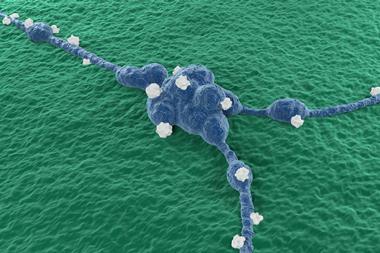
The new system is designed to address both challenges while also stimulating an immune response against the tumour. The platform uses Hathewaya histolytica, a bacterium that naturally secretes an enzyme capable of degrading collagen, which is a major component of the extracellular matrix.
Researchers coated the bacteria with bismuth ferrite nanoparticles, attached DM4, a microtubule inhibitor, and added neurotensin as a targeting ligand. The ligand helps the system recognise bladder cancer cells that overexpress the NTS1 receptor.
Following direct administration into the bladder, the bacteria begin breaking down collagen in the tissue surrounding the tumour. This loosens the matrix, allowing DM4 to penetrate more deeply and disrupt cellular networks within the cancer.
The system also incorporates an ultrasound-responsive mechanism. When ultrasound is applied externally, the bismuth ferrite nanoparticles generate reactive oxygen species, which cause additional damage to cancer cells and trigger cell death that may stimulate immune activity.
By combining biological activity with drug delivery and ultrasound activation, the platform aims to tackle the tumour through several complementary mechanisms rather than relying on chemotherapy alone.
Treatment triggers cancer cell death and immune activity
Laboratory experiments showed that the system degraded collagen, disrupted three-dimensional tumour spheroids and killed 90.8 percent of cancer cells.
Further analysis indicated that treatment caused mitochondrial dysfunction, DNA damage and apoptosis, a form of programmed cell death.
The researchers also observed changes in immune cell activity. Treatment promoted the maturation of dendritic cells, which help coordinate immune responses, and shifted macrophages towards the M1 phenotype, associated with pro-inflammatory and anti-tumour activity.
These findings suggest that the platform may do more than directly damage cancer cells. By altering the tumour microenvironment, it could also help the immune system recognise and attack the disease.
In an orthotopic mouse model, which reproduces tumour growth in the bladder, the combined treatment achieved 82.4 percent tumour inhibition and significantly prolonged survival compared with control groups.
Treated tumours also showed increased infiltration of CD8-positive T cells, which can kill cancer cells, alongside a more favourable ratio of M1 to M2 macrophages. The findings indicate that the treatment may help counter the immunosuppressive conditions that allow tumours to persist.

Further studies needed before clinical use
The researchers describe the platform as an integrated approach combining tumour targeting, extracellular matrix degradation, chemotherapy and immune activation. The bladder’s ability to eliminate material through urine may also help clear tumour debris following treatment.
However, the results remain preclinical and do not establish whether the system will be safe or effective in humans. Further studies will be needed to assess its safety, potential side effects and long-term efficacy, including the risks associated with administering engineered bacterial systems.
If subsequent studies confirm the findings, the platform could offer a new direction for bladder cancer treatment by combining targeted drug delivery with physical disruption of tumour tissue and stimulation of anti-tumour immunity.






No comments yet