


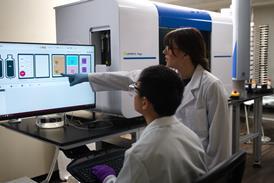

A new study has identified BCAT1 as a metabolic control point in cardiac fibrosis, with genetic deletion and pharmacological inhibition of the enzyme reducing scarring and preserving heart function in mouse models of heart attack.
Heart failure can develop after a heart attack when the body’s attempt to repair damaged tissue leads to excessive scar formation. Now, researchers from Kyushu University and Tokushima University have identified a potential way to interrupt this process by targeting BCAT1, an enzyme that helps maintain the supply of proline needed to produce collagen.
Published in the Journal of Clinical Investigation, the study found that genetically removing BCAT1 or inhibiting its activity with the compound ERG240 reduced cardiac fibrosis and preserved heart function in mice. Notably, the drug treatment remained effective when started seven days after a heart attack, suggesting that the pathway could be targeted after tissue damage has occurred.
Why target collagen production?
Fibrosis is a scarring process that occurs when tissue repair becomes excessive or dysregulated. Although collagen provides essential structural support, too much can stiffen tissue and compromise organ function. In the heart, this can interfere with its ability to pump blood effectively.
Fibrosis is estimated to contribute to 45 percent of deaths in developed countries, yet there is no definitive therapy that directly prevents the process.
For drug discovery researchers, one challenge is finding ways to limit pathological scarring without disrupting the normal repair mechanisms that protect damaged tissue.
The Nagoya University team approached this problem by investigating how myofibroblasts, specialised cells responsible for producing scar tissue, obtain the building blocks required for collagen synthesis.
Around 20 percent of collagen consists of the amino acid proline. The researchers therefore examined the molecular pathways that help maintain its supply, reasoning that disrupting this process might reduce excessive collagen production.
The researchers compared genes activated by physical stress with those activated in mouse hearts after a heart attack. This analysis identified five overlapping candidates, including BCAT1, which was selected for further investigation because its role in myofibroblasts had not been fully explored.
The team found that BCAT1 was barely detectable in healthy mouse hearts but became highly expressed in collagen-producing cells as fibrosis progressed. This indicated that the enzyme supports a cellular pathway that maintains proline availability, enabling myofibroblasts to sustain high levels of collagen production.
This highlights BCAT1 as a potential metabolic control point in fibrosis, as rather than targeting collagen itself, researchers may be able to interfere with the cellular processes that supply the materials needed to produce it.
The distinction matters because metabolic pathways can offer alternative targets when the end product of a disease process is difficult to inhibit selectively.
What does this mean for early drug discovery?
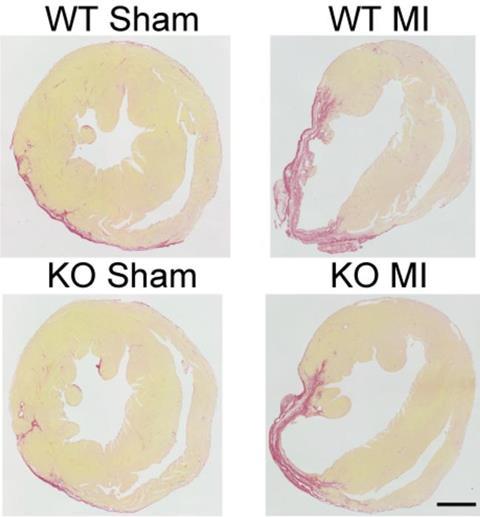
The researchers tested the hypothesis in two ways. Mice genetically engineered to lack BCAT1 produced less collagen after a heart attack, developed less scar tissue and maintained better heart function than control animals.
The team then administered ERG240, a BCAT1 inhibitor, to mice following a heart attack. Treatment reduced scarring and preserved cardiac function, including when administration began seven days after injury.
Together, these experiments provide evidence that BCAT1 is not simply associated with fibrosis but may contribute directly to its progression. The pharmacological results are particularly relevant to drug discovery because they suggest that the pathway can be modulated with an inhibitor rather than genetic manipulation alone.
However, the findings do not yet establish BCAT1 as a clinically validated target. Further work must determine how effectively the inhibitor engages the target in living tissue, how long treatment should continue and whether the benefits can be reproduced across different disease models.
Researchers will also need to establish whether inhibiting BCAT1 interferes with normal tissue repair or other metabolic functions.
Evidence of relevance to human disease
The researchers also examined human heart tissue from patients with heart failure, finding elevated BCAT1 levels associated with increased fibrosis. Higher BCAT1 levels were also detected in the livers of patients with fatty liver disease.
These observations support further investigation of the pathway in human disease, but they do not demonstrate that BCAT1 inhibition will benefit patients. Additional studies are needed to establish whether the enzyme has a causal role in human fibrosis and whether the findings extend to organs beyond the heart.
One potential advantage is that BCAT1 appeared to be largely absent from healthy mouse heart tissue and more active in scar-forming cells. If this pattern is confirmed across relevant human tissues, selective inhibition might reduce pathological collagen production while limiting effects on normal cells.
That possibility remains a hypothesis rather than a demonstrated safety advantage.
What happens next?
The team now plans to investigate whether the BCAT1-proline pathway also drives fibrosis in the liver and other organs. It also aims to develop BCAT1-targeted therapies suitable for clinical use and assess their safety, optimal dosing and efficacy.
For researchers working in fibrosis, the next targets will be establishing the mechanism in greater detail, validating the target in additional models and determining whether compounds can achieve sufficient target inhibition without unacceptable off-target effects.
The study provides a promising starting point for a new therapeutic strategy. Its ultimate significance will depend on whether BCAT1 inhibition can move beyond encouraging preclinical results to deliver safe and meaningful benefits for people living with heart failure or other fibrotic diseases.
Key facts
- Research focus: BCAT1 and its role in cardiac fibrosis
- Potential target: BCAT1, an enzyme that helps maintain the supply of proline required for collagen production
- Key findings: Genetic deletion of BCAT1 and treatment with the inhibitor ERG240 reduced scar tissue formation and preserved heart function in mice
- Treatment timing: Benefits were observed when ERG240 treatment began seven days after a heart attack
- Human evidence: Elevated BCAT1 levels were associated with increased fibrosis in heart tissue from patients with heart failure
- Wider potential: Findings could inform research into fibrosis affecting the liver and other organs
- Next steps: Validate the pathway, develop clinically applicable inhibitors and assess safety, dosing and efficacy
- Development stage: Preclinical research; clinical benefit has not yet been established













No comments yet